Author: Café en Casa Editorial

  • Difference between filter coffee and espresso: a simple guide

    Difference between filter coffee and espresso: a simple guide

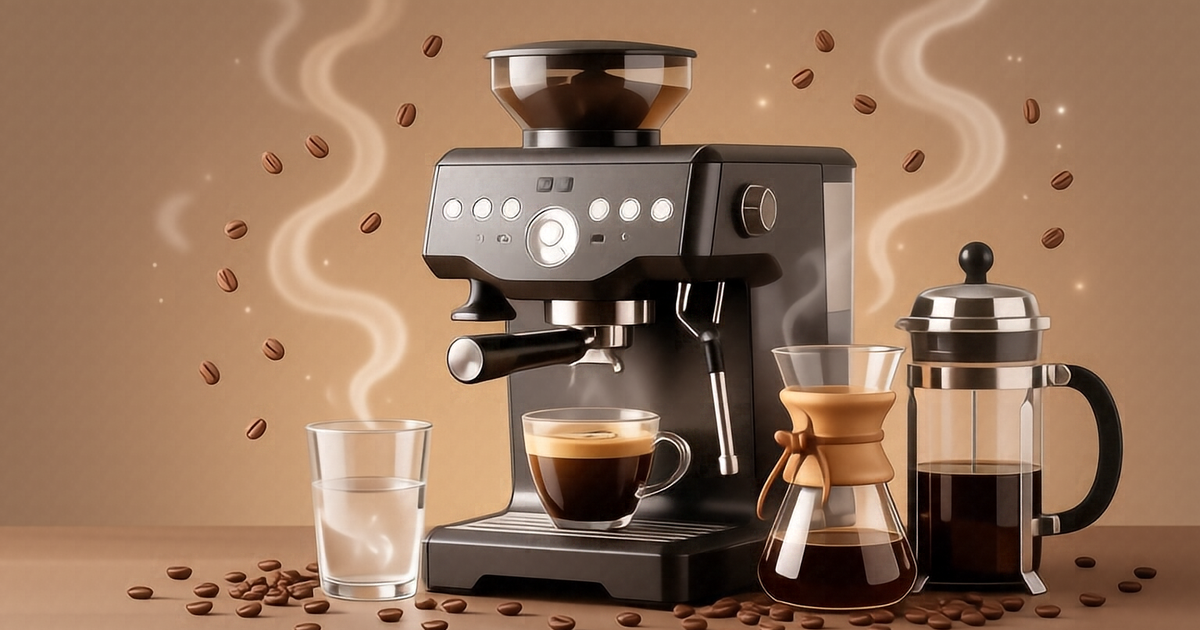
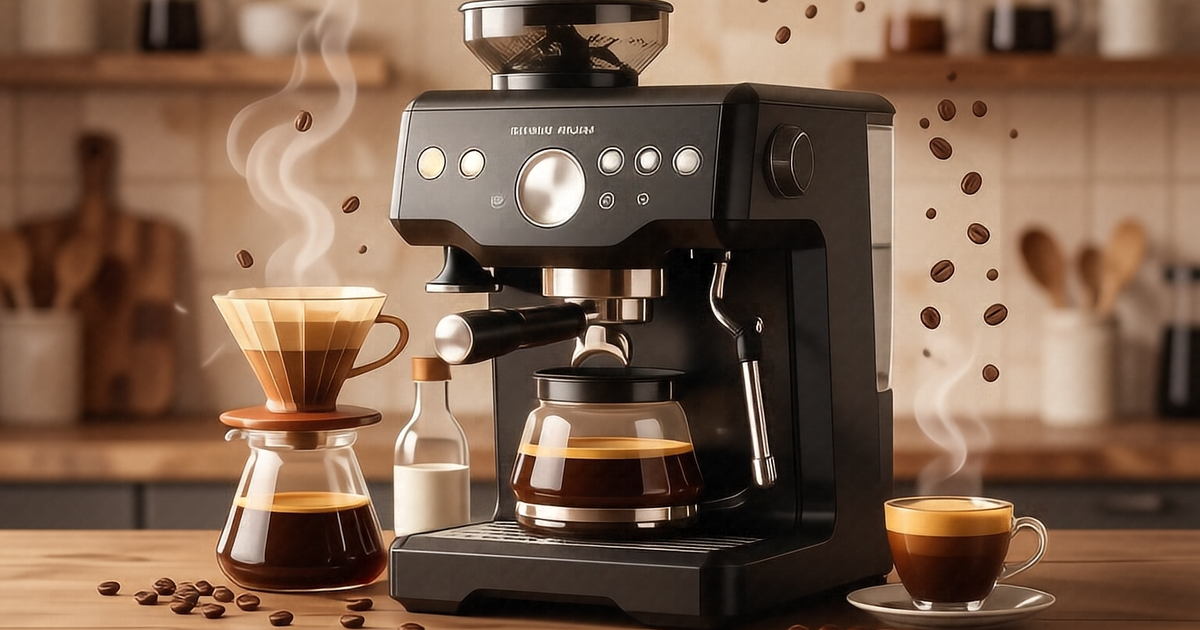
    Both are coffee, but they barely resemble each other beyond that. Espresso is a concentrated 30 ml drink made in 25-30 seconds with pressurized water; filter coffee is a full carafe made in 3-6 minutes with water that falls by gravity. The difference isn’t quality: it’s intent. This guide explains how the result changes and which to choose at each moment.

    Extraction: pressure vs gravity

    • Espresso: 9 bars of pressure push water at 90-96 °C through very finely ground coffee in 25-30 seconds. It extracts oils and suspended solids that paper filters retain.
    • Filter coffee: water falls by gravity through coarser ground coffee over 3-6 minutes. It extracts more slowly and more completely, but without the pressure that emulsifies the oils.

    The grind

    • Espresso: fine grind, almost like powdered sugar. The contact surface is enormous and extraction is extremely fast.
    • Filter: medium grind, like coarse salt. Water takes longer to pass, so the coffee needs less surface area.

    The ratio and the result

    • Espresso: 1 part coffee to 2 parts water (18 g → 36 g of drink). Result: 30 ml concentrated, with crema (the golden foam of emulsified oils), dense body and intense flavor.
    • Filter: 1 part coffee to 15-17 parts water (60 g per liter). Result: 200-300 ml per cup, lighter, no crema, more flavor clarity and less bitterness.

    Caffeine: the espresso myth

    An espresso has 60-80 mg of caffeine in 30 ml; a filter cup, 90-140 mg in 240 ml. By volume, espresso wins by a mile; by cup, filter carries more. If you want a quick boost, espresso; if you want sustained caffeine, filter.

    Flavor and body

    • Espresso: intense, with dense body and notes perceived in concentration. The base of cappuccinos, lattes and Americanos.
    • Filter: cleaner and more balanced, with perceptible acidity and clearer notes. It’s the format professional tasters use to evaluate a coffee.

    Which to choose for each moment

    • Busy morning: espresso or Americano. Quick to make if you have a machine.
    • Relaxed morning or remote work: filter. A carafe lasts all morning and is gentler on the stomach.
    • After a meal: short espresso, digestive and no volume.
    • Work afternoon: filter in a big cup, sustained caffeine without spikes.
    • With milk: espresso, always. A cappuccino or latte is made with an espresso base, not filter coffee.

    FAQ

    Does espresso have more caffeine than filter coffee?

    Per milliliter, yes; per cup, no. An espresso (30 ml) has 60-80 mg; a filter cup (240 ml), 90-140 mg.

    Which is healthier?

    Neither is bad in moderation. Paper-filtered coffee retains diterpenes (compounds that raise LDL cholesterol); espresso, not passing through paper, keeps them. For high consumption, paper-filtered coffee is the most studied option.

    Can I make espresso without a machine?

    You can get close with a Moka pot or an AeroPress, but it’s not real espresso: the 9 bars of pressure are missing and the crema doesn’t form the same way.

    Why does filter coffee taste less bitter?

    Because of the gentler extraction and the paper filter, which retains part of the oils and solids that pass into the cup with espresso.

    Is an Americano espresso with water?

    Yes: espresso + hot water. It’s the way to drink a “long” coffee with espresso’s profile.

    There’s no winner: espresso is intensity and filter is clarity. Keep both at home (a drip machine and a Moka or espresso machine) and choose by the moment.
  • How to buy an espresso machine: guide by budget and use

    How to buy an espresso machine: guide by budget and use

    Buying an espresso machine is easy; buying the right one isn’t. There are machines at €80 and at €3,000, and the priciest aren’t always the best for you. This guide orders the decision: first the type of machine, then what to check on each one, and finally the mistakes everyone makes.

    First: what type of machine do you want?

    • Manual (lever): you control the pressure with a lever. Professional-level results if you learn, but it demands technique and patience. For enthusiasts.
    • Semi-automatic: you grind, dose and decide when to stop the shot. The machine only controls pressure and temperature. It’s the standard for serious hobbyists and the type we recommend to almost everyone.
    • Automatic with grinder: grinds, doses and extracts at the push of a button. Convenient, but the built-in grinder is usually the weak point and maintenance costs more.
    • Super-automatic: from bean to cup without touching anything. Perfect if you want cappuccinos at a button and don’t care about the process. Less control and pricier parts.

    The key question isn’t “which is best” but “how much do you want to participate”. If you enjoy the ritual, semi-automatic. If you just want the coffee, super-automatic.

    What to check on a semi-automatic

    • Pressure: advertising sells 15 or 20 bars. Reality: espresso extracts at 9 bars. What matters is that the pump holds 9 stable bars, not the marketing number.
    • Boiler: dual boiler or heat exchanger machines let you steam milk and extract at the same time. Single boiler (thermoblock) machines are cheaper and enough to start.
    • Grinder: coffee freshness is 80% of the result. If the machine doesn’t come with a burr grinder, budget for a separate one. It’s the most cost-effective purchase you’ll make.
    • Basket and portafilter: 58 mm is the professional standard and the one with the most accessories. 51 mm works but limits you.
    • Steam quality: if you drink cappuccinos, the wand has to texture milk properly. Cheap machines do it badly and slowly.

    Indicative budgets

    • Up to €150: entry machines with thermoblock. Fine for learning, but the result depends a lot on the grinder and your technique.
    • €150-400: the sweet spot for starting seriously. Better temperature, better steam and options with adjustable pressure.
    • €400-900: machines with a real boiler, dual boiler or heat exchanger. The quality jump is noticeable, especially with milk.
    • Over €900: for enthusiasts with criteria. The improvement exists but is incremental, and it doesn’t fix a bad grinder or bad coffee.

    The most expensive mistake

    Spending €800 on a machine and €30 on a blade grinder. The grind is the variable that affects flavor the most: a decent burr grinder (from €80-100) improves your coffee more than doubling the machine budget. If your budget is limited, buy a humbler machine and a better grinder.

    FAQ

    Do I need an expensive machine for good espresso?

    No. With a basic semi-automatic, a good grinder and fresh coffee you get a very respectable espresso. The expensive machine adds consistency and convenience, not magic.

    What’s the difference between 9 and 15 bars?

    Espresso extracts at 9 bars. Machines advertising more pressure use the number as marketing; what matters is stability, not the maximum.

    Is a super-automatic worth it?

    If you value convenience above all, yes. If you love coffee and the process, it will frustrate you: less control and pricier maintenance.

    Should I buy the machine and grinder together?

    If the budget allows, yes. If not, the burr grinder first, then the machine. The order matters more than it seems.

    Is pod coffee espresso?

    Not exactly: it’s pod coffee, a different product with its own profile. If you want real espresso, you need freshly ground coffee and a machine that extracts it.

    Start with a simple semi-automatic, a burr grinder and freshly roasted specialty coffee. That trio outperforms any expensive machine without the other two. And once you master extraction, you’ll know exactly what you want from your next machine.

  • Best espresso machine for beginners 2026: buying guide

    Best espresso machine for beginners 2026: buying guide

    Starting with espresso at home used to mean expensive machines and a steep learning curve. In 2026 there are more good options than ever for beginners — the hard part is no longer finding a machine, it’s knowing which one to buy for your budget, your counter space and how much coffee you’ll actually make. This guide sorts the options by level, explains what sets each type apart, and tells you what to check so you don’t waste your money.

    What you actually need to make espresso at home

    Espresso is hot water forced through finely ground coffee. That takes three things: a machine that builds pressure (9 bars at the group head), a grinder that grinds fine and consistent, and fresh whole-bean coffee. The grinder matters more than the machine: with pre-ground supermarket coffee, no cheap machine will produce good results.

    Types of espresso machine for beginners

    Manual (lever)

    The cheapest route to real espresso: you control the pressure with a lever. The learning curve is steeper, but with a decent grinder these give surprising results for little money. Great if you enjoy the process and the ritual.

    Semi-automatic

    The classic home machine: you grind, dose and decide when to stop the shot. These offer the best value for learning. In 2026, entry-level models with stable pressure and temperature control cost less than they did five years ago.

    Super-automatic

    They grind, dose and extract at the push of a button. Convenient and consistent, but pricier, bigger and with less control over the result. They’re for people who want a decent espresso without thinking about the process, not for people who want to learn to make it better.

    Pod machines

    Not real espresso (15-19 bars of pressure but pre-ground, aged coffee in a pod), though many advertise it that way. Always identical results, zero learning and a high cost per cup. If convenience is your only priority, they’re fine; if you want to learn, they’re not.

    What to check before you buy

    • Pressure: 9 real bars at the group head. “15-20 bars” is marketing; what matters is stability.
    • Stable temperature: a thermoblock or boiler that holds temperature without swinging. That’s what separates good espresso from sour or burnt shots.
    • Built-in grinder or not: if the machine doesn’t grind, you’ll need a separate grinder. Budget for both.
    • 54 mm portafilter or larger: 51 mm works, but 54+ has far more accessories available.
    • Steam wand: if you want cappuccinos, make sure the wand is decent (a real tube wand, not an auto-frother arm, if you want control).
    • Size and tank: measure your counter and think about whether you’ll make 1 or 4 cups a day.

    Budget guide

    Up to €150: manual or entry semi-automatic

    At this budget the best investment is usually a manual lever machine plus a hand grinder. The espresso will beat what a cheap supermarket semi-automatic produces.

    €150-400: the sweet spot for beginners

    Here you find entry semi-automatics with 54 mm portafilters, stable temperature and a decent steam wand. This is the recommended range for most beginners who want to really learn.

    €400-800: serious semi-automatics

    PID-controlled pressure, better materials, stronger steam. If you already know coffee is a serious hobby, this range will last you years.

    €800+: super-automatics and high end

    Full super-automatics or prosumer semi-automatics. Only if budget isn’t an issue and you know you’ll use it daily.

    Common beginner mistakes

    • Buying the machine and forgetting the grinder: the number one mistake. A cheap burr grinder improves your coffee more than an expensive machine.
    • Using pre-ground coffee: it loses aroma within minutes. Buy beans and grind right before brewing.
    • Ignoring the water: hard tap water ruins both flavor and machine. Use filtered water.
    • Not weighing the coffee: dose (16-18 g for a double) matters more than the exact recipe.

    FAQ

    How much does it cost to start with espresso at home?

    With €250-400 (entry semi-automatic + hand grinder) you get real espresso equipment. Below that, lever machines are the alternative.

    Do pod machines make espresso?

    No: they use pre-ground packaged coffee and the pressure isn’t applied the same way. The result is an espresso-style drink, not real espresso.

    Do I need an expensive grinder?

    Not expensive, but it must be burr. A €40-80 hand burr grinder already makes a huge difference versus supermarket ground coffee.

    Semi-automatic or super-automatic to start?

    If you want to learn and improve, semi-automatic. If you want to press a button and forget, super-automatic (at a higher price).

    Is an €800 machine worth it for a beginner?

    No: your first setup doesn’t determine your coffee quality — the grinder and fresh coffee do. Start mid-range and upgrade when you know what’s missing.

    Choose by budget and space, not by marketing: an entry semi-automatic with a good grinder makes better coffee than a cheap super-automatic. And remember: fresh whole-bean coffee is 80% of the result.

  • Best coffee grinder 2026: burr vs blade and what to buy

    Best coffee grinder 2026: burr vs blade and what to buy

    The grinder is the purchase that improves your coffee the most — more than the machine, more than the method, more than the roast. You can own the most expensive machine on the market and ruin the coffee with a bad grind; with a good grinder and a humble machine, the coffee jumps several levels. This guide explains the difference between burr and blade grinders, what to look for when buying, and which to choose for your budget and your method.

    Why the grind matters so much

    The grind controls extraction speed: the same coffee tastes different ground fine vs coarse. For a balanced cup you need two things: the right fineness for your method and, above all, consistency — particles of the same size. If the grind is uneven, some particles over-extract and others stay under-extracted, and the result is coffee that’s sour and bitter at the same time. That’s exactly what happens with blade grinders.

    Blade grinders: the most common problem

    Blade grinders (the ones that look like small blenders) chop the coffee with spinning blades. They’re cheap and fine for spices, but for coffee they have two serious flaws:

    • Uneven grind: some particles come out like dust, others like stones. Guaranteed uneven extraction.
    • No real control: there’s no fineness setting, only grinding time. More seconds isn’t “finer”, it’s “more dust”.

    Bottom line: if your budget is very tight, a cheap hand burr grinder beats any electric blade grinder.

    Burr grinders: the only recommended option

    Burr grinders crush the coffee between two discs or cones at an adjustable distance. The result is a uniform, reproducible grind: the same setting gives the same coffee every day.

    Conical burrs: the most common for home. Quieter, less retention and good performance. Ideal for filter and entry-level espresso.

    Flat burrs: the professional standard. Even more uniform grind and more precise adjustment, but pricier, noisier and with more retention. For people who already know coffee is a serious hobby.

    What to look for when buying

    • Burr type: conical to start, flat if you want the maximum. Either beats blades by a mile.
    • Fineness adjustment: the more steps (or continuous adjustment), the better. Espresso needs fine steps; filter needs a wide medium range.
    • Consistency: read reviews about grind uniformity. It’s the metric that defines a good grinder.
    • Retention: how much coffee stays inside. Low retention (under 1 g) means what you weigh is what you grind.
    • Dosing: does it grind straight into the portafilter (better for espresso) or into a container? Some come with a weight dosing cup.
    • Noise and cleaning: hand grinders are silent; electric ones vary. Make sure the burrs are accessible for cleaning.

    Budget guide

    Up to €50: hand burr. The best value in coffee. A hand grinder with conical burrs (€30-50) produces a perfectly respectable grind for filter and drip coffee. The effort is real, but for 1-2 cups a day it’s manageable.

    €50-150: entry electric. Conical burr grinders with stepped adjustment, enough for filter and beginner espresso. This is the range most people should start in if they don’t want to grind by hand.

    €150-400: serious electric. Better consistency, fine stepped or stepless adjustment, less retention and less noise. Here you find grinders that make truly consistent espresso.

    €400+: high end and prosumer. Flat burrs, ultra-fine stepped adjustment, weight dosing and build quality that lasts decades. Only if coffee is a central hobby and the budget allows.

    Common buying mistakes

    • Buying blades “to try”: it’s throwing money away. If the budget is short, hand burr.
    • Spending on the machine and skimping on the grinder: the right order is the reverse. A good grinder improves any machine.
    • Ignoring your method: an espresso-only grinder won’t do filter and vice versa. Check that the adjustment range covers your method (or methods).
    • Never cleaning the grinder: coffee oils go rancid and contaminate the grind. Clean the burrs every few weeks.

    FAQ

    Is an expensive grinder worth it for filter coffee?

    Less than for espresso — filter forgives uneven grinds more — but consistency still shows. A €40 hand burr grinder is already a huge improvement over blades.

    How long does a burr grinder last?

    Quality conical burrs last for years (thousands of kilos of coffee) before needing replacement. Hand grinders last practically a lifetime with care.

    Do I grind finer or coarser for each method?

    From finest to coarsest: espresso, AeroPress, V60/Chemex, French press, drip. Your grinder should cover at least your main method with margin.

    Is supermarket ground coffee an option?

    For emergencies, yes; for daily use, no. It loses aroma within hours and comes ground for no method in particular. Grinding at home is the cheapest quality jump there is.

    Which grinder do I buy if I make espresso and filter?

    One with a wide adjustment range: entry conical (€50-150) if espresso is occasional, or a mid-range one (€150-400) if you want consistency in both.

    Buy the best burr grinder your budget allows and leave the machine for later: it’s the order that improves your coffee the most per euro. A consistent, freshly ground dose turns any method into a notable cup.

  • V60 vs Chemex vs French press: which to choose for your coffee

    V60 vs Chemex vs French press: which to choose for your coffee

    Three methods, three completely different coffees. The V60, the Chemex and the French press are the three most popular ways to brew filter coffee at home, and none is “better” than the others: each produces a different flavor profile and demands a different level of attention. This comparison tells you which one fits your routine.

    V60: precision and clarity

    The V60 is a cone made of ceramic, glass or plastic with a single large opening and spiral ridges. Water passes through quickly and the coffee extracts very efficiently.

    • Flavor: a clean, bright cup with lots of aromatic clarity. The coffee’s nuances show up like in no other method.
    • Difficulty: medium-high. The V60 demands technique: controlled pouring, consistent grind and attention to time. It’s the favorite method of baristas in competition.
    • Gear: you need a gooseneck kettle to control the pour and a scale if you want consistency.
    • Cleanup: easy — toss the filter and rinse the cone.

    Who it’s for: if you love specialty coffee and enjoy the ritual of brewing it well, the V60 is the method that most rewards attention.

    Chemex: elegance and a clean cup

    The Chemex is a glass carafe shaped like an hourglass with a special thick filter. The filter retains more oils and particles than the V60.

    • Flavor: a very clean, light cup with low body and lots of sweetness. It’s the most “filtered” coffee of the three: almost no sediment or oils.
    • Difficulty: medium. The pour is more forgiving than the V60, and the thick filter forgives grind errors.
    • Gear: the carafe also serves; you only need the filter and, ideally, a gooseneck kettle.
    • Batch size: the ideal method for 2-4 cups at once, something the V60 does worse.
    • Cleanup: easy, though the glass carafe needs a bit of care.

    Who it’s for: if you want several quality cups with elegance and no fuss, or if you prefer a light, sweet coffee.

    French press: body and simplicity

    The French press is a glass cylinder with a metal mesh plunger. The coffee steeps in contact with the water and is separated by pressing the mesh. There’s no paper filter: the oils and fine particles stay in the cup.

    • Flavor: a full-bodied, dense cup with the coffee’s oils present. More intense and “earthy” than the other two.
    • Difficulty: low. You measure coffee, add water, wait 4 minutes and press. There’s no pouring technique to master.
    • Gear: just the carafe. No paper filters or special kettles. The grind must be coarse (like breadcrumbs).
    • Cleanup: the most tedious — you have to empty the grounds and wash the mesh.

    Who it’s for: if you want a full-bodied coffee without fuss, or if your budget doesn’t include a scale or special kettle. It’s the best method to start with.

    Quick comparison

    • Body: French press (maximum) > V60 > Chemex (minimum).
    • Flavor clarity: Chemex and V60 much cleaner than French press.
    • Difficulty: French press (minimum) > Chemex > V60 (maximum).
    • Batch size: Chemex (best for groups) > French press > V60 (best for one cup).
    • Cleanup: V60 (easiest) > Chemex > French press (most tedious).
    • Entry price: French press (cheapest) > V60 > Chemex.

    FAQ

    Which method gives the smoothest coffee?

    The Chemex: the thick filter removes almost all oils and particles. It’s the cleanest, lightest coffee of the three.

    Which method is best for a beginner?

    The French press: no pouring technique, no filters, no scale. Good coffee with minimal gear.

    Can I use the same grind for all three?

    No. The V60 and Chemex need a medium-fine grind; the French press, a coarse one. An adjustable burr grinder handles all three.

    How much coffee and water do I use?

    The standard ratio is 60 g of coffee per liter of water (1:16.7). For a 250 ml cup: about 15 g of coffee.

    Is the V60 only for experts?

    No, but it’s the method that punishes mistakes the most. With a consistent grind and a slow pour, anyone can get a good cup — and improves fast.

    Start where you are: if you want simplicity, French press; if you want elegant batch brewing, Chemex; if you want to squeeze the most out of specialty coffee, V60. All three can live in the same kitchen without a problem.