If your coffee tastes sour, it’s under-extracted: the water passed through too quickly and didn’t pull out the sugars and oils that balance the acidity. If it tastes bitter and burnt, it’s over-extracted: the water was in contact too long and dragged out the bitter compounds. The good news is that both problems are fixed with the same four controls: grind, dose, temperature and time. This guide teaches you to diagnose and correct each case.
Why coffee tastes sour (under-extraction)
Acidity is the first note extracted. If the water passes through too fast, you only pull the acids and miss the sweetness that balances them. Typical causes:
- Grind too coarse: water rushes through the coffee without time to extract.
- Low dose: there’s little coffee and the water passes without resistance.
- Cold water: below 90 °C extraction slows down and comes up short.
- Short extraction time: the coffee finishes in under 20 seconds.
Why coffee tastes bitter (over-extraction)
Bitterness is the last note extracted. If the water passes slowly or stays too long, it drags out the bitter compounds from the end of the extraction. Typical causes:
- Grind too fine: water barely passes and over-extracts what it touches.
- High dose: too much coffee for the water available.
- Water too hot: above 96 °C it burns and bitters.
- Long extraction time: over 35 seconds, or too long a steep with immersion methods.
- Over-roasted or old coffee: dark roasts and stale coffee bitter more easily.
The quick diagnosis table
- Sour + finishes in under 20 s → grind finer.
- Sour + lukewarm water → raise the temperature (90-96 °C).
- Bitter + finishes in over 35 s → grind coarser.
- Bitter + boiling water → lower the temperature.
- Bitter + very dark roast → reduce the dose or change the roast.
- Sour and bitter at once → uneven extraction: check the leveling of the coffee bed and the tamp.
How to adjust one variable at a time
The most common mistake is changing two things at once. If you grind finer and also raise the temperature, you won’t know what worked. The method:
- Set the base recipe: 18 g of coffee, 36 g of liquid, 25-30 seconds, 90-96 °C.
- Brew one cup and note the flavor and the time.
- Change one variable only (usually the grind, which has the most effect).
- Repeat until the time is right: if the time works, the flavor almost always follows.
Adjustments by method
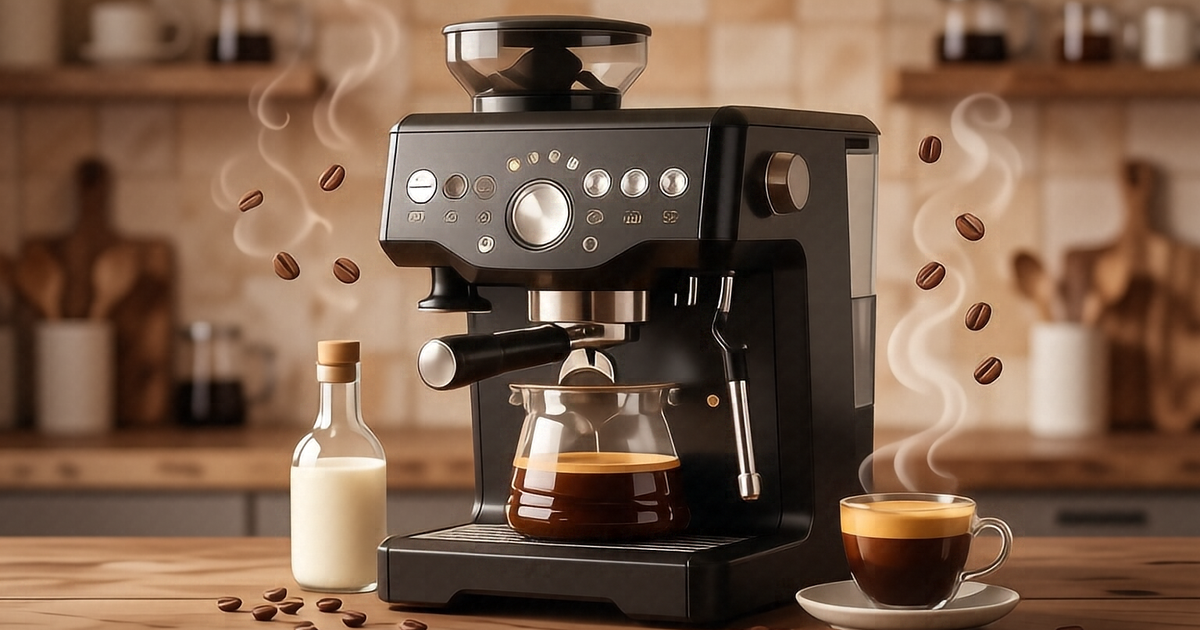
Espresso: the grind is the main control. Sour → finer; bitter → coarser. If the problem persists, check temperature and dose.
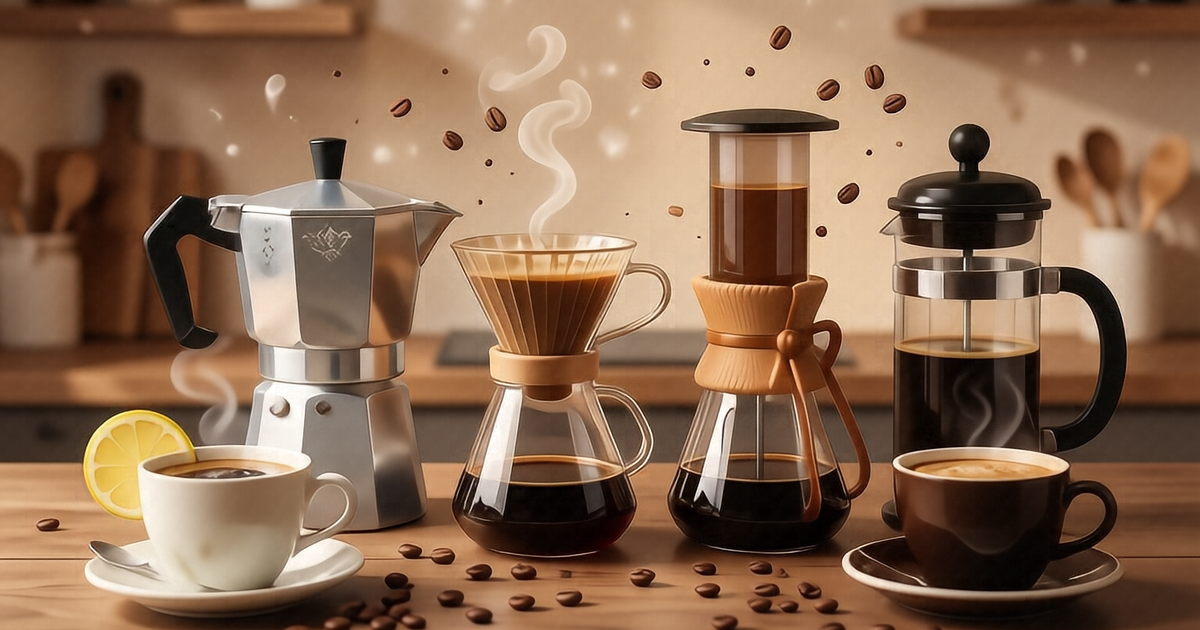
Filter coffee (V60, Chemex): besides the grind, control the pour. Sour → grind finer or pour slower; bitter → grind coarser or lower the water temperature (aim for 92-94 °C).
French press and AeroPress: here the steep time is the main control. Sour → lengthen the steep; bitter → shorten it. With the AeroPress, a fine grind with a slow press also helps.
When the problem isn’t extraction
- Old coffee: coffee loses sweetness and gains bitterness over the weeks. Check the roast date, not the best-before date.
- Hard or chlorinated water: bad water flattens flavor. Try filtered water.
- Dirty machine: stale oils in the group and portafilter bitter any coffee. Clean the group regularly.
- Very dark roast: if the roast is the problem, no grind adjustment fully fixes it. Try a medium roast.
FAQ
Why is my espresso sour even when I grind finer?
The temperature may be low, or the dose too small. Also check that the portafilter is properly filled and level: an uneven bed gives uneven extraction.
Does bitter coffee mean more caffeine?
No. Bitterness comes from over-extraction, not caffeine. An over-extracted coffee can even have less caffeine than a well-extracted one.
What water temperature do I use for each method?
Espresso, 90-96 °C. Filter, 92-96 °C (lower for dark roasts). Immersion, 85-95 °C depending on the method. No thermometer? Wait 30-60 seconds after boiling.
How long should an espresso take?
25-30 seconds from the first drop, for 36 g of liquid with 18 g of coffee. Less time, sour; more, bitter.
Can I fix sour coffee with milk or sugar?
You can mask it, but not fix it: the problem is in the extraction and it will repeat in every cup. Adjust the grind and you’ll get good coffee without needing to cover it.
Sour and bitter coffee aren’t flaws of the brand: they’re messages from your extraction. Learn to read them, change one variable at a time, and within a few cups you’ll be pulling balanced coffee — sweet, not burnt. The timer and the grinder are your best allies.